Egress windows are one of the most important—and most regulated—upgrades you can make to a home. If you have a basement bedroom, a finished lower-level living space, or you're planning to add one, an egress window isn't optional. It's required by building code in virtually every jurisdiction in the United States, and for good reason: it provides a life-saving emergency exit in case of fire or other emergencies.
This guide covers everything homeowners need to know about egress windows—what they are, what the code requires, how much they cost, and what the installation process actually looks like from start to finish.
What Is an Egress Window?
An egress window is a window large enough for a person to climb through to escape in an emergency, and also large enough for a firefighter in full gear to climb in to rescue someone. The word "egress" simply means an exit or means of leaving.
Egress windows are most commonly required in:
- Basement bedrooms — Any room used or intended as a sleeping space below grade
- Finished basement living areas — In many jurisdictions, any habitable basement room requires egress
- Basement home offices — Depends on local interpretation and whether the space is used as a bedroom
- Any below-grade room without direct outdoor exit access
Importantly, not every basement window qualifies as egress. A standard basement hopper or slider may be far too small. Egress windows must meet specific minimum size requirements.
IRC Egress Window Requirements
The International Residential Code (IRC) sets the baseline standards that most states and municipalities adopt. According to the IRC, every sleeping room must have at least one emergency escape and rescue opening that meets ALL of the following:
Minimum Size Requirements
| Measurement | Minimum Requirement |
|---|
| Net clear opening | 5.7 square feet (5.0 sq ft on ground floor) |
| Minimum clear opening height | 24 inches |
| Minimum clear opening width | 20 inches |
| Maximum sill height from floor | 44 inches |
These dimensions refer to the clear opening when the window is fully open—not the rough opening or the frame size. A window frame might measure 36" x 48" but the actual openable area could be smaller depending on the style.
Window Style Considerations
Not every window style is suited for egress. Here's how different types compare:
Single/Double Hung Windows — Can qualify, but the vertical opening is only half the window height, so a large frame is needed to meet the 5.7 sq ft requirement.
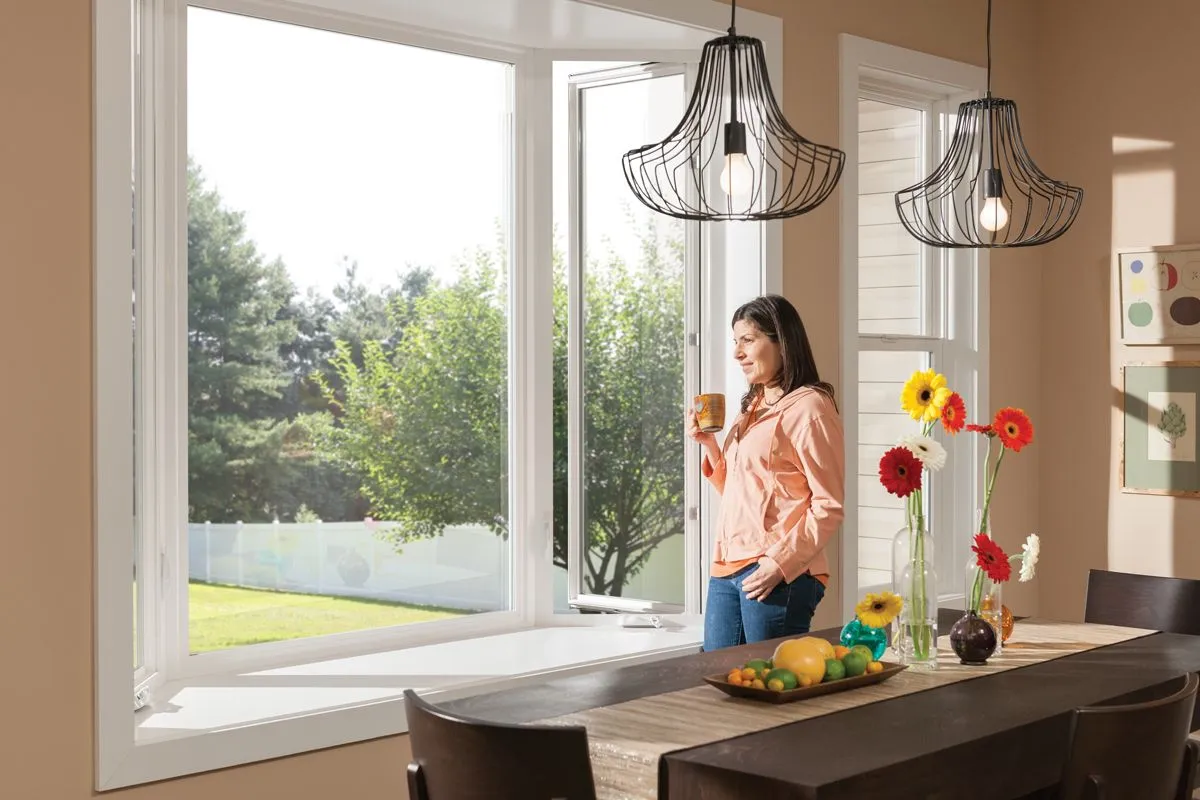
Casement Windows — Excellent for egress. They swing fully open, providing the full frame area as the clear opening. A 24" x 36" casement easily meets code.
Sliding Windows — Can qualify, but only half the window slides, so you need a larger overall frame size.
Awning Windows — Typically not suitable for egress since they hinge at the top and limit clearance.
Hopper Windows — Usually too small and hinge at the bottom, limiting clear opening height.
Local Code Requirements May Differ
While the IRC provides the national baseline, local building codes often have additional requirements or modifications. Before you begin any egress window project, contact your local building department to confirm:
- Whether permits are required (almost always yes)
- Any local amendments to IRC egress requirements
- Whether a window well is required (it usually is for below-grade installations)
- Window well size and drainage requirements
- Whether the project requires a licensed contractor or can be owner-performed
Skipping the permit process is a common mistake homeowners regret. Unpermitted egress windows can create serious problems when you sell the home, and insurance companies may deny claims related to unpermitted work.
Window Well Requirements for Basement Egress
When an egress window is installed below grade, a window well must be excavated and installed outside the window. The IRC requires that window wells for egress openings meet these minimums:
- Horizontal area: At least 9 square feet
- Minimum horizontal projection: 36 inches from the wall
- Minimum width: 36 inches
If the window well is more than 44 inches deep, it must include a permanently attached ladder or steps that don't obstruct the opening.
Window wells are typically constructed from galvanized steel, polyethylene, or poured concrete. Steel and poly wells are the most common for residential applications.
Window Well Drainage
Basement window wells need proper drainage to prevent water from pooling against the foundation. Options include:
- A drainage layer of gravel at the bottom of the well (minimum 6 inches)
- A drain pipe connected to the footing drain or daylight
- A cover (which must be easily opened from inside without tools in case of emergency)
Poor window well drainage is a leading cause of basement water infiltration after egress window installation. Don't skip this step.
How Much Does Egress Window Installation Cost?
Egress window installation is more complex and expensive than standard window replacement because it typically requires cutting through a concrete or block foundation wall. Costs vary significantly based on your foundation type, wall thickness, and local labor rates.
Typical Cost Ranges
| Component | Estimated Cost |
|---|
| Egress window (unit cost) | $300–$800 |
| Concrete/block cutting | $500–$1,500 |
| Window well (steel or poly) | $150–$500 |
| Window well installation | $200–$600 |
| Excavation | $300–$800 |
| Permits and inspections | $100–$400 |
| Total (typical range) | $2,500–$5,000+ |
Homes with poured concrete foundations typically cost more than those with block foundations because concrete cutting requires specialized diamond-blade equipment. Homes with thicker or reinforced walls will also cost more.
Homes in colder climates—including Utah—should budget for window well drainage work, especially if proper footing drainage isn't already in place.
Use the window cost estimator for a more tailored starting estimate, or take the window replacement quiz to clarify your project scope before calling contractors.
The Egress Window Installation Process
Here is what a typical egress window installation looks like from start to finish:
Step 1: Site Assessment and Planning
A contractor will visit to assess your foundation type, wall thickness, exterior grade level, and the location of any utilities (gas, water, electrical) near the proposed window location. They'll confirm the planned window location meets code requirements for egress height from the finished floor.
Step 2: Permit Application
Most jurisdictions require a building permit before any structural work begins. Your contractor will typically pull the permit on your behalf and schedule the required inspections. Permit timelines vary widely—anywhere from a few days to several weeks in busy permit offices.
Step 3: Utility Location
Before any cutting, utility lines must be marked by your local "Call 811" service and a contractor doing underground locates. This prevents accidentally cutting through buried utilities outside the foundation.
Step 4: Excavation
For below-grade installations, the exterior soil must be excavated to expose the foundation wall and create the window well area. This is typically done with a mini-excavator or by hand, depending on access. The excavated soil is hauled away or stockpiled for backfill.
Step 5: Cutting the Foundation Opening
This is the most complex step. Using a diamond-blade concrete saw or a core drill, the contractor cuts the rough opening in the foundation wall. The rough opening must be sized correctly—typically 2–3 inches larger than the window frame on all sides to allow for adjustment and proper shimming.
For block foundations, individual blocks are cut and removed. For poured concrete, the entire section is cut and removed in pieces.
Step 6: Framing and Window Installation
A pressure-treated lumber frame is installed in the opening to support the window and bear the load from the foundation wall above. The window is then set into the opening, shimmed level and plumb, and secured. Proper flashing is applied to prevent water infiltration.
High-quality vinyl windows from manufacturers like Milgard work well for egress applications due to their durability, low maintenance, and strong thermal performance.
Step 7: Window Well Installation
The window well is positioned against the exterior wall, secured to the foundation, and backfilled around the edges. A gravel drainage layer is installed at the bottom. If required, a drain pipe is connected.
Step 8: Interior and Exterior Finishing
On the interior, the rough opening is drywalled, trimmed, and painted to match the room. On the exterior, any disturbed grading and landscaping is restored.
Step 9: Inspection
The building inspector will visit to verify the installation meets code. Common inspection checkpoints include:
- Clear opening dimensions
- Maximum sill height from floor
- Window well dimensions
- Drainage provisions
- Proper header and framing in the opening
Once the inspection passes, the permit is closed and the project is complete.
Choosing the Right Egress Window
When selecting an egress window, consider:
Frame material — Vinyl is the most popular choice for egress windows due to its low maintenance, good insulation value, and resistance to moisture. Fiberglass offers superior strength and thermal performance. Visit our window replacement page for an overview of available materials.
Energy performance — Egress windows in basements are often on north-facing or partially below-grade walls. Look for windows with good U-factor ratings. Check our window energy savings calculator to estimate long-term energy savings from a higher-performing window.
Style — Casement windows are the preferred style for egress applications because they swing fully open. A single casement at 24" x 36" or larger will meet minimum egress requirements in most jurisdictions.
Security — Some egress windows include locking mechanisms that still allow quick release from inside. Avoid windows with latches that require tools to open in an emergency.
Converting a Basement into Legal Living Space
One of the most common reasons homeowners install egress windows is to convert an unfinished or non-conforming basement into legal finished living space—specifically bedrooms that can be legally advertised and appraised as such.
Adding a conforming egress window to a basement bedroom can:
- Increase legal bedroom count on your home's appraisal
- Add significant resale value—each additional bedroom typically adds $20,000–$50,000 or more in market value
- Enable rental income from a legal basement apartment or ADU
- Bring the space into compliance with insurance requirements for habitability
Real estate agents and appraisers in most markets will not count a below-grade room as a legal bedroom without proper egress. If you're planning to sell or refinance, an egress window installation often pays for itself many times over. See our related article on how much value do new windows add to your home for more on window ROI.
DIY vs. Professional Installation
Foundation work is not a good candidate for DIY. Cutting into a concrete or block foundation wall requires specialized equipment and experience. Mistakes can cause:
- Structural damage if the header isn't properly sized or installed
- Water infiltration if flashing and drainage are done incorrectly
- Failed inspections requiring expensive rework
- Void equipment warranties (manufacturers typically require professional installation)
Even experienced DIYers should hire a licensed contractor for the foundation cutting and framing portions of the project. Some homeowners choose to do their own excavation to save money on labor, which can be reasonable if proper equipment is available.
Egress Window Maintenance
Once installed, egress windows require minimal maintenance but shouldn't be neglected:
- Test the opening mechanism twice a year to ensure it opens freely and fully
- Clear the window well of leaves, snow, and debris after each storm
- Inspect the drainage each spring for blockages
- Check weatherstripping and seals annually for wear or gaps
- Clean the window well cover (if installed) to keep it clear
Frequently Asked Questions About Egress Windows
Does every basement window need to be egress?
No. Only basement sleeping rooms are required to have egress windows under the IRC. However, local codes may have additional requirements. Check with your local building department.
Can I install an egress window myself?
The window installation itself may be permitted as owner work in some jurisdictions, but cutting through a foundation wall typically requires a licensed contractor. Always check local requirements before proceeding.
How long does egress window installation take?
For a single window, expect 1–2 days for the full installation including excavation, cutting, window installation, and window well installation. Finishing work (drywall, trim, painting) takes additional time.
Will my homeowner's insurance require egress windows?
Some insurance companies require egress windows before they will insure a finished basement. If you have a finished basement bedroom without egress, check with your insurance carrier.
Can egress windows be installed in a concrete block foundation?
Yes. Block foundations are often easier to work with than poured concrete because individual blocks can be cut and removed more precisely. The structural header requirement is the same for both.
What is the maximum sill height for an egress window?
The IRC requires the sill height to be no more than 44 inches above the finished floor, so an adult can reach the window and climb through without assistance. Local codes may set a lower maximum.
Do I need a window well cover?
A cover is not required by the IRC, but it's strongly recommended to keep debris and water out of the well and prevent children or pets from falling in. Any cover must be easily opened from inside without tools.
Next Steps
If you're planning an egress window installation, start with a visit to your local building department to understand the specific permit requirements and code amendments in your area. Then request quotes from at least two or three licensed contractors who have experience with foundation work.
For Utah homeowners, our egress window installation guide for Utah covers state-specific requirements and contractor considerations in the Utah market.
Getting egress right from the start saves time, money, and stress—and most importantly, it gives you and your family a code-compliant way out in an emergency.