Complete Guide to Window Styles and Options

Window and home improvement expert with deep knowledge of Utah's unique climate and residential needs.
Window selection goes far beyond just picking a frame material. The style and design of your windows dramatically affect your home's functionality, aesthetics, and energy efficiency. With so many options available, understanding the differences between window types helps you make the best choice for your specific needs and home architecture.
What Are Window Styles?
Window styles refer to how the window operates and its physical configuration. Unlike frame materials (vinyl, fiberglass, wood), which affect durability and maintenance, window styles determine functionality and how the window fits into your home's design.
Homeowners typically choose windows based on:
- Functionality - How you want to open and ventilate
- Aesthetics - What matches your home's architectural style
- Space constraints - What fits your wall openings
- Maintenance requirements - How much upkeep you're willing to do
- Energy efficiency - How well the style retains conditioned air
Let's explore the major window styles and when to use each.
Double-Hung Windows
Double-hung windows are the most popular residential window style, accounting for roughly 60% of replacement windows sold. Both the upper and lower sashes slide vertically to open.
Key features:
- Top and bottom sashes both move independently
- Typically opened from top, bottom, or both
- Classic appearance fits most home styles
- Balanced springs or weights help sashes stay in place
- Easy to clean from inside
Best for:
- Traditional and transitional home styles
- Rooms where you want flexible ventilation control
- Homeowners who value classic aesthetics
- Standard wall openings without space constraints
Pros:
- Familiar and comfortable for most people
- Excellent for cross ventilation when opened top and bottom
- Many design variations available
- Works well on all home styles
- Interior-only cleaning for upper sash (on modern models)
Cons:
- Takes up interior space when fully open
- May be harder for elderly or disabled people to operate
- Requires regular cleaning of tracks
Best matches: Traditional homes, colonial architecture, farmhouse designs, Victorian homes. Our window frame materials guide explores material options for this style.
Casement Windows
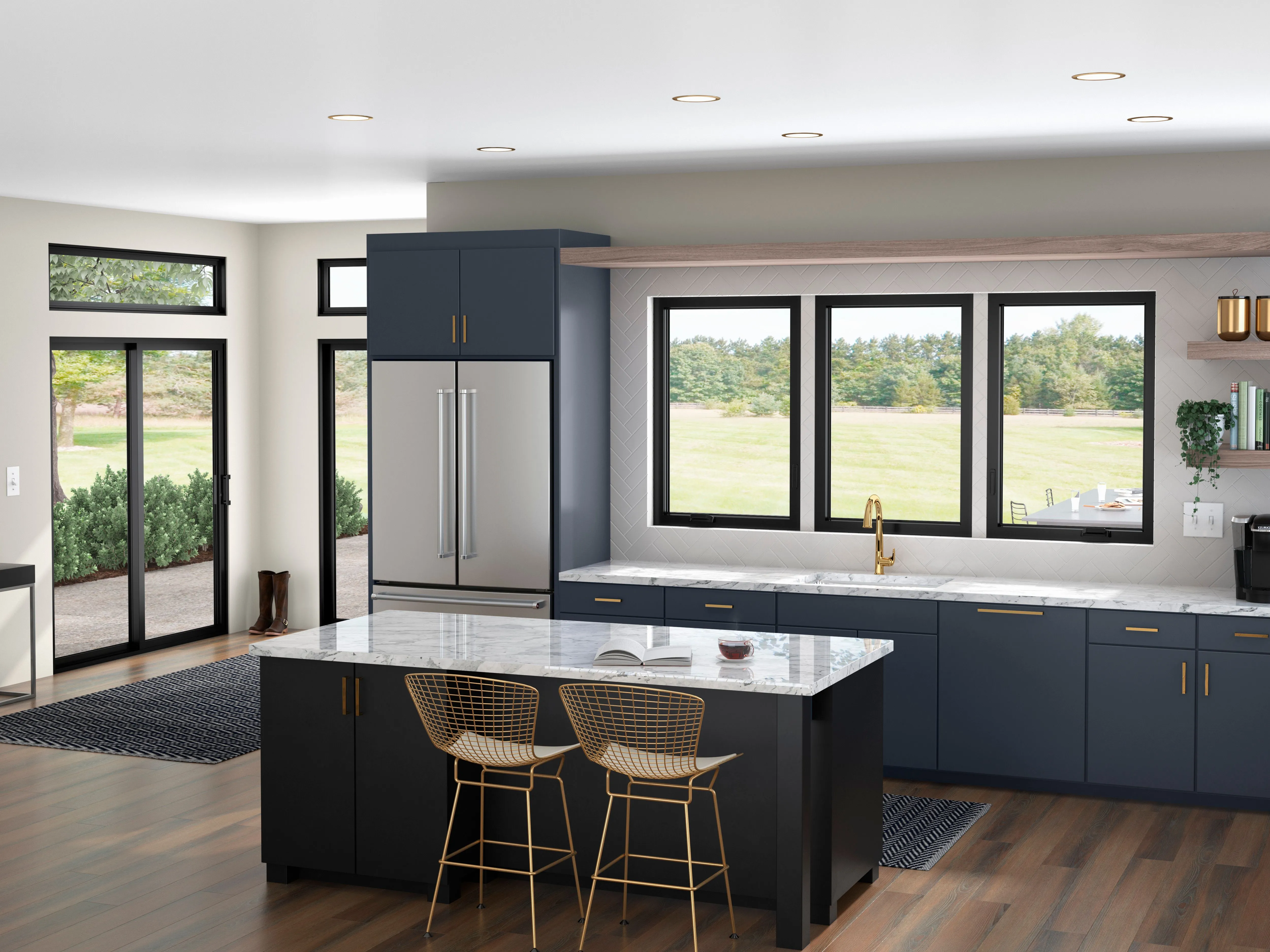
Casement windows are hinged on the side and crank outward like a door. These windows have been growing in popularity due to excellent ventilation and modern aesthetic appeal.
Key features:
- Hinged on one side, crank to open outward
- Typically have a crank handle for operation
- Seal tightly when closed
- Can open at various angles from 0-90 degrees
- Often used in pairs or triples
Best for:
- Modern and contemporary homes
- Kitchens and bathrooms where direct ventilation is needed
- Hard-to-reach locations (crank operation easier than climbing)
- Corner installations where multiple windows create wide openings
Pros:
- Excellent weathertight seal when closed
- Superior ventilation - opens fully with minimal obstruction
- Easier operation for people with limited mobility (crank vs. sliding)
- Clean exterior lines enhance modern architecture
- Can project window screen outward, maintaining clear views
Cons:
- Crank handle can be inconvenient if frequently opened/closed
- Protrusion when open limits patio/deck access
- Slightly higher cost than double-hung
- Limited fabric options for modern interiors
- More complex operation than sliding windows
Best matches: Modern homes, farmhouses with contemporary touches, commercial buildings. Compare different frame materials to find the right casement window for your style.
Sliding Windows
Sliding windows feature one or more sashes that slide horizontally within a frame. These windows are practical, space-efficient, and increasingly popular.
Key features:
- One or both sashes slide left or right
- Horizontal track system
- Minimal protrusion when open
- Contemporary appearance
- Smooth operation with quality hardware
Best for:
- Modern homes and buildings
- Spaces with limited clearance (patios, deck railings nearby)
- Rooms where you want unobstructed window operation
- Commercial applications
- Views where you want minimal obstruction from frame
Pros:
- Space-efficient - no protrusion into or out of home
- Smooth, easy operation
- Clean contemporary lines
- Great for maximizing open views
- Excellent for corner installations
Cons:
- Only half the window opens (compared to casement or double-hung)
- Tracks require regular cleaning
- Weather stripping deteriorates faster than vertical sashes
- Window coverings can obstruct sash operation
- Slightly less effective for ventilation than casement
Best matches: Ranch homes, modern builds, lakefront properties, contemporary designs.
Bay Windows
A bay window is not technically a window style but rather a configuration where multiple windows project outward from the wall, creating an alcove inside the home. Bay windows typically use three or more window units (usually double-hung or casement) set at angles.
Key features:
- Three windows at 30-45-30 degree angles
- Creates interior alcove or seating area
- Projects 12-24 inches beyond exterior wall
- Increases natural light and views significantly
- Can be vented or fixed (some or all windows open)
Best for:
- Creating focal points in living rooms or bedrooms
- Adding architectural interest to exterior
- Maximizing natural light in specific rooms
- Homes with space for exterior projection
- Traditional and transitional styles
Pros:
- Creates dramatic architectural feature
- Substantial natural light increase
- Adds interior space perception
- Great for window seats
- Increases home curb appeal and resale value
Cons:
- Significantly higher cost than single windows
- Requires space for exterior projection
- More complex installation (full-frame job)
- More surfaces to seal and weatherproof
- Requires custom framing in most cases
Best matches: Victorian, colonial, and transitional homes. A bay window replacement guide provides detailed cost and installation information.
Bow Windows
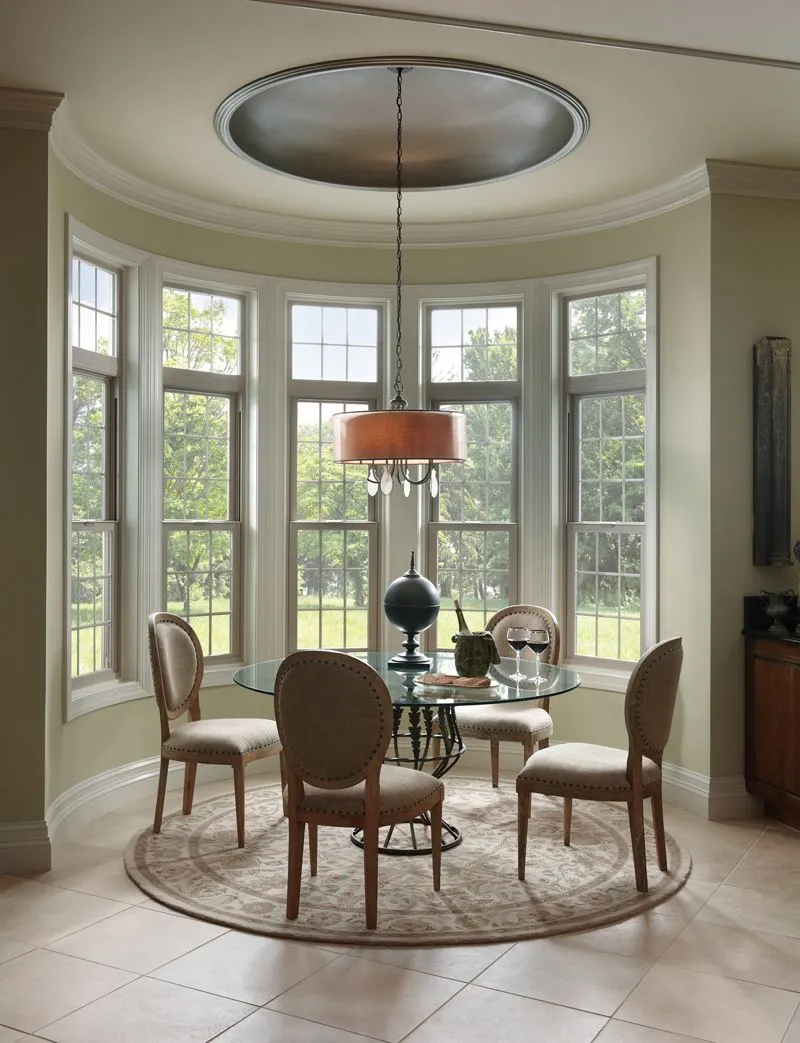
Bow windows are similar to bay windows but curve outward in a graceful arc instead of creating distinct angles. They typically include four or more window units in a gentle curve.
Key features:
- Four or more window units in a curved configuration
- Radius curve ranges from 12-20 feet
- Creates sweeping interior alcove
- More architectural depth than bay
- Typically more expensive than bay windows
Best for:
- High-end homes where premium aesthetics justify cost
- Traditional architecture seeking elegant detail
- Homes with sufficient exterior space
- Rooms where you want a dramatic focal point
Pros:
- Premium aesthetic appeal
- Excellent natural light
- Smooth curve eliminates sharp angles
- Premium home value enhancement
- Distinctive architectural statement
Cons:
- Most expensive window configuration option
- Very limited customization/sizing options
- Requires precise installation
- Most complex to seal and weatherproof
- Not suitable for all home styles
Picture Windows
Picture windows are large, fixed (non-operable) windows designed primarily for views and natural light rather than ventilation. They typically feature minimal framing to maximize glass area.
Key features:
- Non-opening sash
- Minimal frame profile
- Large glass area for unobstructed views
- Available in virtually any size
- Typically less expensive per square foot than operable windows
Best for:
- Creating dramatic views of landscapes, water features
- Wall spaces where ventilation isn't needed
- Combining with operable windows for both view and function
- Homes with beautiful exterior views
- Any home style with the right context
Pros:
- Lowest cost per square foot
- Excellent weathertight seal (no moving parts to wear)
- Minimalist frame design
- Excellent for views and natural light
- Simple installation compared to other styles
Cons:
- Provides no ventilation whatsoever
- Must be combined with other windows for operable units
- Requires careful placement and context
- Cannot be used in spaces requiring egress
- Large panes more susceptible to impact damage
Best matches: Contemporary homes, waterfront properties, homes with scenic views, mid-century modern designs.
Awning Windows
Awning windows are hinged at the top and swing outward like an awning or canopy. They're less common than other styles but serve specific purposes well.
Key features:
- Hinged at top, swing outward from bottom
- Excellent for ventilation without rain entry
- Can remain partially open during light rain
- Typically used in groups
- Compact and space-efficient
Best for:
- Basement windows for emergency egress and light
- Bathrooms above bathtubs
- Areas where protection from rain is important
- Windows that need to stay partially open during weather
- Contemporary and modern designs
Pros:
- Can stay open in rain without water entry
- Excellent ventilation control
- Compact operation
- Clean modern aesthetic
- Good for basement applications
Cons:
- Less versatile than casement or double-hung
- Requires space above window for operation
- Can be awkward to reach in upper wall locations
- Limited frame material/style options
- Not suitable for every application
Hopper Windows
Hopper windows are the opposite of awning windows—hinged at the bottom, they swing inward. They're most common in basements and utility spaces.
Key features:
- Hinged at bottom, swing inward
- Opens from the bottom up
- Typically used in basements or utility spaces
- Compact footprint
- Usually more affordable than other styles
Best for:
- Basement windows
- Utility rooms
- Emergency egress compliance
- Small spaces where space efficiency matters
- Budget-conscious projects
Pros:
- Excellent ventilation for basements
- Compact operation (swings inward)
- Often affordable
- Good for basement lighting and air exchange
- Simple, durable mechanism
Cons:
- Swinging inward can obstruct interior space
- Less versatile than other styles
- Limited aesthetic applications
- Often requires protection to prevent people hitting head
- Not suitable for most visible locations
Single-Hung Windows
Single-hung windows function like double-hung windows but with one important difference: only the bottom sash moves, while the top sash is fixed and doesn't open.
Key features:
- Bottom sash slides vertically and opens
- Top sash is fixed and sealed
- Simpler operation than double-hung
- Slightly lower cost than double-hung
- Same basic aesthetic as double-hung
Best for:
- Budget-conscious replacement projects
- Homes where top sashes rarely open
- Upper story windows where lower sash operation is sufficient
- Transitional cost between fixed and double-hung
Pros:
- Lower cost than double-hung
- Simpler mechanism (fewer moving parts)
- Familiar appearance
- Works for most applications
- Good ventilation for most homeowners
Cons:
- Limits ventilation control (can't open top independently)
- Less versatile than double-hung
- Still requires track maintenance
- Slightly cheaper appearance than double-hung
- Not ideal for rooms needing cross ventilation
Specialty and Combination Styles
Fixed Windows Non-operable panes used for light and views. Often combined with operable windows.
Specialty Shapes Arched, round, octagon, and custom shapes for architectural interest. Usually significantly more expensive.
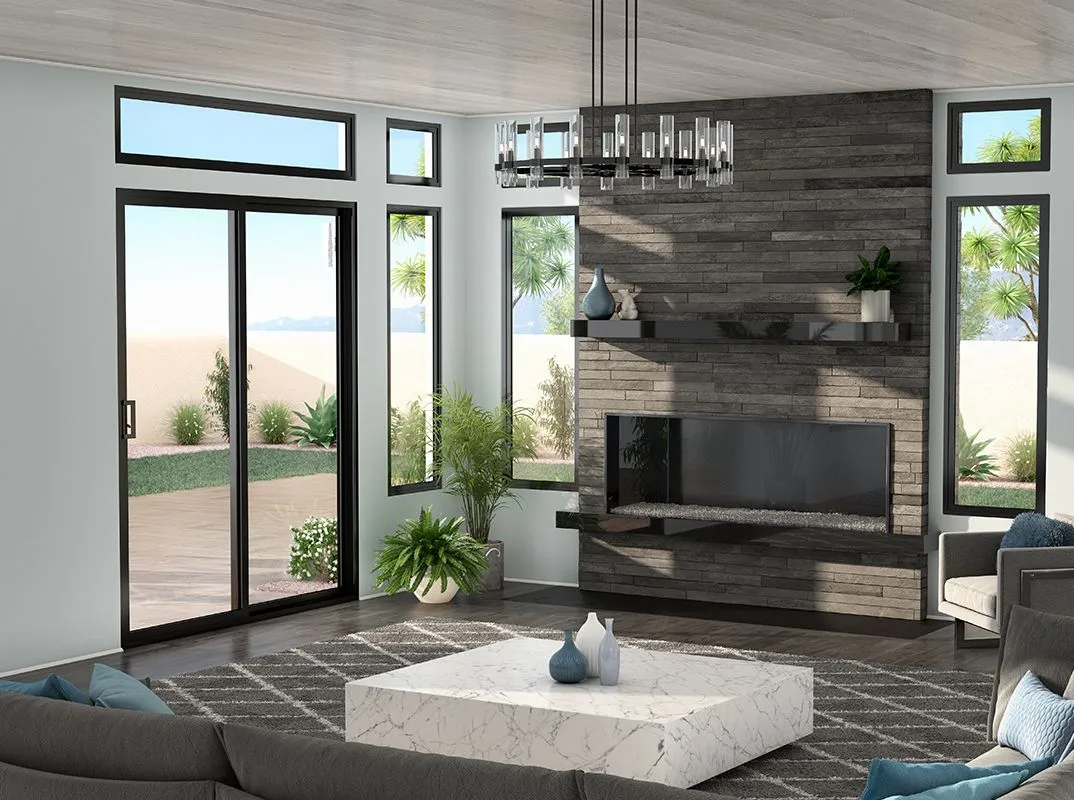
Transom Windows Small horizontal windows above doors or larger windows, historically used for light in entry areas.
Garden/Greenhouse Windows Small bay-style windows that project outward, often used above kitchen sinks for plant display.
Choosing the Right Window Style for Your Home
Consider these factors when selecting window styles:
1. Home Architecture
- Traditional homes (colonial, victorian): Double-hung or casement
- Modern/contemporary: Sliding, picture, or casement
- Transitional: Casement, sliding, or bay
- Modern farmhouse: Casement or double-hung
2. Climate and Weather
- Hot climates: Fixed or minimally-opening windows
- Cold climates: Casement or double-hung for better sealing
- Rainy climates: Casement or awning (better rain protection)
- Windy areas: Double-hung or picture (stability)
3. Views and Natural Light
- Important views: Picture windows or bay/bow windows
- Corner locations: Sliding windows for unobstructed views
- Multiple exposures: Mix of styles for flexibility
4. Ventilation Needs
- Maximum ventilation: Casement (opens fully)
- Flexible control: Double-hung (independent top/bottom)
- Minimal ventilation: Picture or fixed (no air flow)
5. Space Constraints
- Limited interior space: Sliding or fixed
- Limited exterior space: Casement or double-hung (no protrusion)
- Patios/decks nearby: Sliding windows
6. Maintenance Tolerance
- Low maintenance: Picture or fixed windows
- Moderate: Casement, sliding
- Higher maintenance: Single-hung or double-hung (tracks need cleaning)
7. Accessibility
- Limited mobility: Casement (crank easier than sliding)
- Strength limitations: Picture or fixed (no operation needed)
Window Style and Energy Efficiency
While frame material matters most for energy performance, window style affects how well your home retains conditioned air:
Most Efficient Styles:
- Picture windows (no air leaks from operation)
- Casement (tight seal when closed)
- Awning/hopper (tight seals, rain protection)
Good Efficiency:
- Double-hung (seals well when closed)
- Sliding (seals well when closed)
Adequate Efficiency:
- Single-hung (slightly more air leakage than double-hung)
- Bay/bow (depends on configuration)
All styles perform well with modern Low-E coatings, proper installation, and quality weatherstripping. Learn how to choose energy-efficient windows for deeper guidance on efficiency ratings.
Combining Window Styles
Many homes effectively use multiple window styles in different locations:
- Primary living spaces: Bay window or picture windows for views
- Bedrooms: Double-hung or casement for familiar operation
- Bathrooms: Casement for ventilation control
- Basements: Awning or hopper for egress compliance
- Entries: Picture windows beside doors with fixed panes
This mixed approach balances aesthetics, function, and efficiency while creating visual interest.
Cost Comparison by Style
Most Affordable:
- Single-hung: $300-600 per window
- Double-hung: $400-800 per window
- Fixed/picture: $300-700 per window
Mid-Range:
- Casement: $600-1200 per window
- Sliding: $500-1000 per window
- Awning/hopper: $400-900 per window
Most Expensive:
- Bay window: $2000-4000+ per unit
- Bow window: $3000-5000+ per unit
- Specialty shapes: $800-2000+ per unit
Prices vary significantly based on material (vinyl vs. fiberglass vs. wood), size, and quality tier.
Making Your Decision
Start by assessing your home's architectural style and which window styles are typical for that style. Consider climate factors, your daily ventilation needs, and whether views or natural light are important priorities.
Visit our window styles gallery to see various styles in different settings. For cost-specific questions about your project, use our window cost estimator to get personalized pricing based on the styles you're considering.
Ready to explore replacement options? Our comprehensive window replacement cost guide provides detailed pricing for each style, and our service area pages can connect you with local professionals who specialize in your chosen window style.